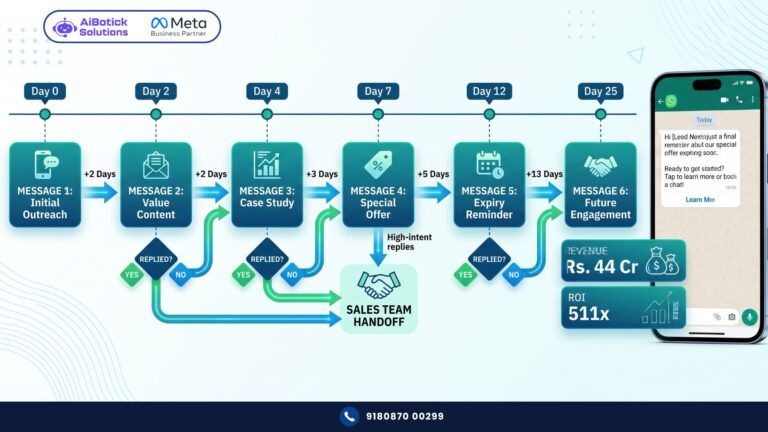
Okay ek cheez poochna chahta hoon.
Jab bhi main kisi business owner ko “WhatsApp chatbot” bolता hoon — unke chehre pe ek specific expression aata hai.
Half curious. Half scared.
Jaise maine keh diya — “bhai, aapko abhi ek spaceship banana padega.”
And I get it. “Chatbot” sounds technical. Sounds like something only a software company with 50 engineers can build. Sounds expensive. Sounds complicated.
It’s not.
Main 15 saal se is IT Industry mein hoon. Har jagah — aur har jagah yahi dekha: jab koi pehli baar chatbot ka demo dekhta hai — unka pehla reaction hota hai — “bas itna hi hai? Itna simple?”
Haan bhai. Itna simple hai.
Toh aaj — koi jargon nahi. Koi technical terms nahi. Bilkul seedha — andar kya hota hai ek WhatsApp chatbot ke? Let me show you exactly what’s happening behind every automated reply.
WhatsApp Chatbot Hai Kya? Ekdum Basic Se Shuru Karte Hain
Simple definition.
Ek WhatsApp chatbot = ek pre-designed conversation flow jo automatically respond karta hai customer ke messages ko — bina kisi human ke.
That’s it.
Koi AI magic nahi. Koi supercomputer nahi. Bas ek system — jisme aapne pehle se decide kiya hua hai: agar customer yeh bole, toh hum yeh bolenge.
Socho aise — tumne apne best salesperson ko train kiya. Usne 1000 customers se baat ki. Ab tumhe pata hai — 80% customers same 8-10 sawaal poochte hain. Same objections. Same confusions.
Ab socho — kya hoga agar woh salesperson ke answers, ek system mein daal do? Jo 24×7 available ho, kabhi mood kharab na ho, aur ek saath 500 customers se baat kar sake?
Woh system — chatbot hai.
Andar Kya Hota Hai? Step By Step.
Okay. Yahan pe main thoda slow down karta hoon. Kyunki yeh part actually interesting hai.
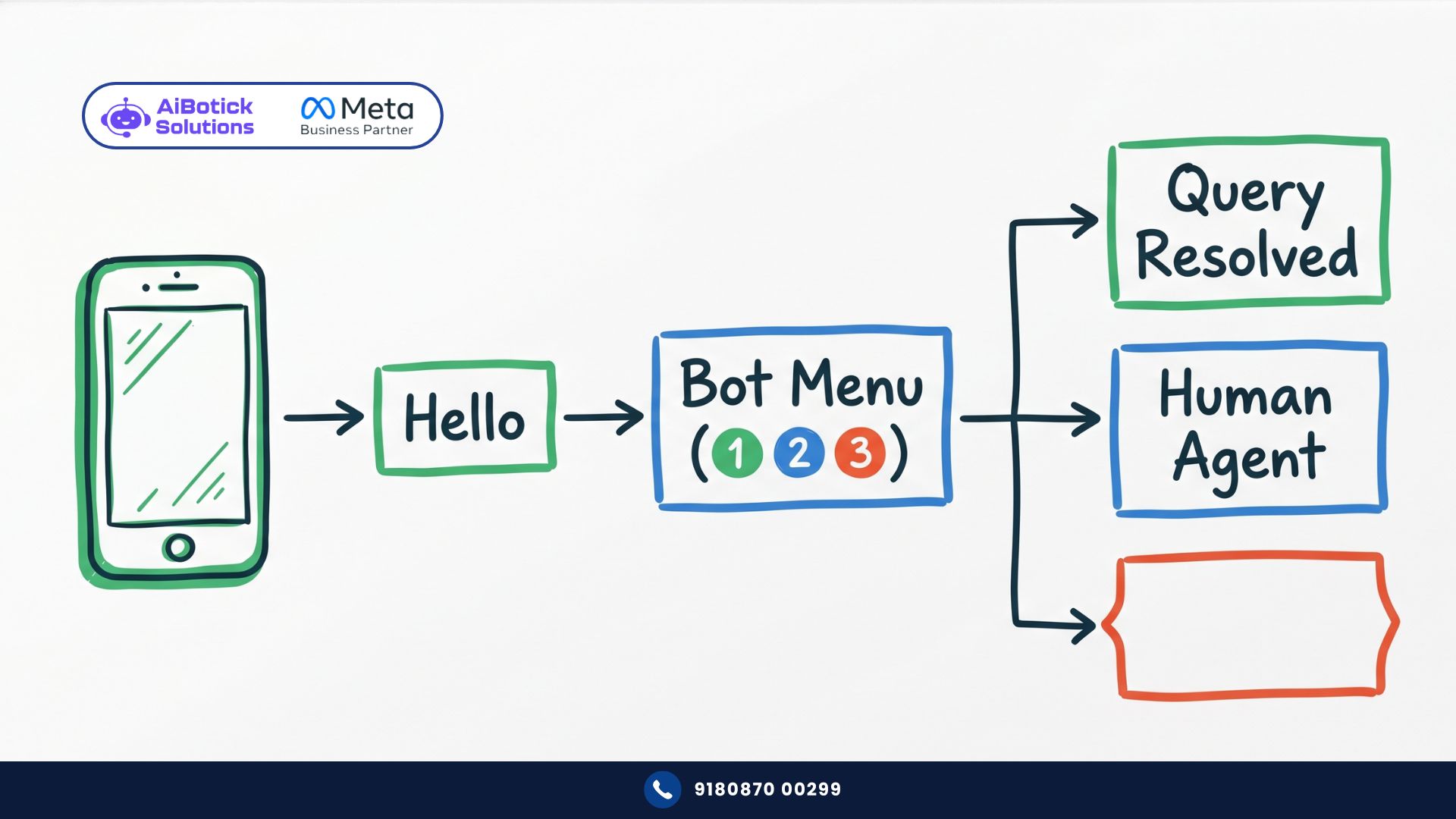
Step 1 — Customer sends a message
Customer ne type kiya: “Hello”
Ya “Hi” ya “Haan” ya “Namaste” ya literally kuch bhi.
Chatbot ka pehla kaam — yeh detect karna ki customer ne kuch bheja. Trigger fire hua. System active ho gaya.
Step 2 — Bot sends the welcome flow
Ab bot ne apna pehla message bheja.
“Namaste! 🙏 Aap AiBotick ke official WhatsApp pe aaye hain. Main aapki kaise help kar sakta hoon?
Please choose karo:
1️⃣ — Pricing jaanni hai
2️⃣ — Demo book karna hai
3️⃣ — Features samajhne hain
4️⃣ — Kuch aur poochna hai”
Simple. Clean. Customer ke saamne options hain.
Step 3 — Customer responds
Customer ne type kiya “1” — ya “Pricing” — ya “pehla wala” — ya “bhai paise kitne lagte hain.”
Yahan pe ek interesting cheez hoti hai — aur yeh woh part hai jo zyada tar log nahi jaante.
Modern chatbots sirf exact match nahi dhundte. Woh intent detect karte hain.
Matlab — customer ne “1” bola, ya “pricing chahiye”, ya “kitna cost hai” — bot samajhta hai ki yeh pricing query hai. Aur same flow trigger hota hai.
Step 4 — Bot delivers the relevant information
Pricing flow trigger hua. Bot ne bheja:
“Great! Hamare plans yeh hain: 📋
✅ Starter — Rs.15,000/year
✅ Growth — Rs.25,000/year
✅ Scale — Rs.45,000/year
✅ Enterprise — Rs.60,000/year
Kaunse plan ke baare mein detail chahiye?”
Customer ne bola “Growth.”
Bot ne Growth plan ki poori detail bhej di — features, limits, kya kya milega — sab.
Step 5 — Conversation continues OR handoff to human
Ab do cheezein ho sakti hain.
Option A — Customer ka sawaal bot handle kar leta hai. Inquiry complete. Lead captured. Follow-up scheduled automatically.
Option B — Customer kuch aisa poochh leta hai jo bot ke bahar hai. Complex query. Negotiation. Kuch specific.
Bot immediately ek human agent ko alert karta hai — “bhai, yeh customer aapko chahiye.” Conversation seamlessly human ke paas transfer ho jaati hai. Customer ko pata bhi nahi chalta kab switch hua.
Yahi hai human handoff. Aur yeh feature — honestly — ek chatbot ko useful aur safe dono banata hai.
Teen Types Ke WhatsApp Chatbot — Kaunsa Aapke Liye Sahi Hai?
Okay. Yahan pe thoda rukna zaroori hai.
Kyunki “chatbot” ek blanket term hai — aur iske andar teen bilkul alag cheezein hoti hain.
Type 1 — Rule-Based Chatbot (Menu Bot)
Yeh sabse simple hai. Sabse zyada use hota hai. Aur 80% businesses ke liye — yeh bilkul sufficient hai.
Kaam kaise karta hai: Aapne define kiya — if customer says X, reply with Y. That’s it. Fixed menu. Fixed responses. No guessing.
Iska example: Woh “1️⃣ Pricing, 2️⃣ Demo, 3️⃣ Features” menu jo maine upar describe kiya — yeh rule-based hai.
Kiske liye: Businesses with predictable, repetitive queries. Coaching institutes, ecommerce, travel agents, clinics. Basically — any business where 70-80% queries are the same.
Limitation: Customer kuch unexpected pooche — bot confuse ho jaata hai. “Main yeh nahi samjha, please choose karo: 1, 2, ya 3.” Gets annoying fast agar bot ke bahar jaaye.
Still figuring out if your business actually needs this? Check these 10 signs you’ve outgrown manual WhatsApp
Type 2 — Keyword-Based Chatbot
Thoda smarter than rule-based. Bot exact menu choice nahi dhundta — keywords dhundta hai.
Customer ne “price” likha — bot pricing flow trigger karta hai. “Appointment” — booking flow. “Cancel” — cancellation flow.
More flexible. Customer ko exactly “1” ya “2” nahi likhna padta. Natural language mein bol sakte hain — as long as keyword hai andar.
Kiske liye: Businesses with slightly more varied queries. Better user experience than pure menu-based.
Limitation: Customer ek unusual word use kare jo aapne anticipate nahi kiya — bot phir confuse.
Type 3 — AI-Powered Chatbot (The Smart One)
Ab yeh interesting hai. 😊
Yeh bot ChatGPT (OpenAI) ke saath integrate hota hai. Matlab — customer kuch bhi likhe, in any language, in any format — bot actually samajhta hai intent. Aur human-like response deta hai.
“Bhai mujhe aapka Growth plan lena hai lekin price thodi zyada lag rahi hai, koi discount milega?”
Rule-based bot: “Main yeh nahi samjha. Please choose: 1, 2, ya 3.”
AI bot: “Haan bilkul! Main aapko hamare current offers ke baare mein batata hoon. Agar aap annual plan le rahe ho toh hum thodi flexibility de sakte hain. Kya main ek demo arrange karoon?”
Same query. Completely different experience.
Kiske liye: Scale aur Enterprise businesses. High-volume, varied queries. Premium customer experience.
Cost: Thoda zyada — kyunki AI API calls cost karti hain. But ROI is dramatically higher for the right business.
Ek Real Example — Jisse Sab Clear Ho Jaaye
Main ek coaching institute ki baat karta hoon. Mumbai. Engineering entrance prep.
Pehle kya hota tha:
- Din mein 80-100 enquiries WhatsApp pe
- 2 log manually respond karte the
- Response time — 2-4 ghante
- Sham ke baad koi respond nahi karta tha
- Leads subah tak almost always cold ho jaate the
Chatbot ke baad kya hua:
- Bot instantly respond karta hai — 24×7
- Course details, fees, batch timings, demo class booking — sab automated
- Human sirf tab involved hota hai jab student actually serious ho aur specific questions pooche
- Response time — 8 seconds. Raat ko bhi.
Results in 60 days:
- Demo class bookings — 3x
- Lead-to-enquiry conversion — up 40%
- Same 2-person team — but now handling 3x the volume
Same team. Same product. Same marketing budget.
Bas ek chatbot.
Want to understand the full WhatsApp automation picture first? Start with our plain-English guide.
“Lekin Mohit Bhai — Customers Ko Bura Nahi Lagega Bot Se Baat Karke?”
Yeh sawaal. Har baar. 😄
Aur honestly — main pehle yeh khud sochta tha. jab maine start kiya tha — mujhe bhi doubt tha.
Phir maine data dekha.
Customers bots se bura nahi maante. Customers bura maante hain:
- 3 ghante baad reply aane se
- Same question 3 baar poochne se
- Galat information milne se
- Kisi ka call back na aane se
Agar bot 5 seconds mein sahi jawab de — customer happy hai. Genuinely. Unhe honestly zyada fark nahi padta ki human ne reply kiya ya bot ne — as long as query resolve hui.
Aur yeh main apni experience se bol raha hoon — not theory. Real businesses. Real customers. Real feedback.
WhatsApp Chatbot Build Karna Kitna Mushkil Hai? Bilkul Nahi.
Bilkul nahi.
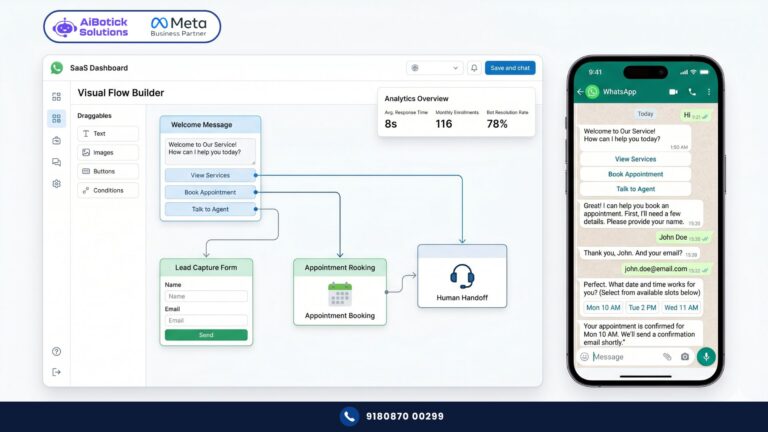
Modern platforms mein — drag and drop. Literally.
Aap ek box kheenchte ho — yeh customer ka message hai. Ek aur box — yeh bot ka reply hai. Line connect karo dono ke beech. Done.
Ek basic chatbot — aapki specific business ke liye — 2-4 ghante mein ready ho sakta hai. Koi coding nahi. Koi technical knowledge nahi. Agar aap WhatsApp use kar sakte ho — aap chatbot bana sakte ho.
Aur platforms like AiBotick mein — hum yeh karte hain aapke saath. Onboarding session mein — saath baithke. Aapka first bot flow hum milke banate hain. Aap seekhte ho. Hum guide karte hain. Koi akela nahi chhoda jaata.
Yeh woh part hai jo honestly koi competitor nahi karta. Woh software de dete hain. Hum partner bante hain.
Toh Summary — Andar Kya Hota Hai?
Seedha:
- Customer message bhejta hai → trigger fire hota hai
- Bot intent detect karta hai → sahi flow start hota hai
- Customer options milti hain → woh choose karta hai
- Bot relevant info deliver karta hai → question resolve hota hai
- Complex query → human handoff → seamless transition
- Sab kuch logged → data available → team ke paas full context
Koi rocket science nahi. Koi magic nahi.
Bas ek smart, pre-designed conversation — jo aapki taraf se 24×7 kaam karta hai.
Ab Aapki Baari
Agar aap yeh sochke baithe ho — “theek hai, mujhe actually dekhna hai yeh kaise kaam karta hai mere business ke liye” —
Toh wahi kijiye.
Demo ko Live dekhiye. Apni industry ke liye ek real chatbot flow dekho — not a generic demo. Aapke actual customers, aapke actual questions, aapke actual use case ke liye.
Neeche tap karo. 👇 WhatsApp pe real conversation — bilkul waise jaise ek chatbot karta hai. Bas is baar hum khud baat karenge. 😄
— Mohit Shah | 15+ years of Learning & Growing | Ab help karta hoon businesses ko — jo actually kaam karta hai woh samajhne mein
Q1: How does a WhatsApp chatbot actually work?
A1: A WhatsApp chatbot works through pre-designed conversation flows. When a customer sends a message, it triggers the bot which detects what the customer wants — through keywords, menu choices, or AI — and delivers the relevant response automatically. Complex queries get handed off to a human agent seamlessly.
Q2: Do I need coding skills to build a WhatsApp chatbot?
A2: No. Modern WhatsApp automation platforms use drag-and-drop builders. You design conversation flows visually — no coding required. A basic chatbot for most businesses can be built in 2-4 hours with the right platform and proper onboarding support.
Q3: Will customers mind talking to a WhatsApp chatbot instead of a human?
A3: Customers don’t mind bots — they mind slow replies, wrong information, and unresolved queries. A bot that responds in 8 seconds with the right answer gets better customer feedback than a human who takes 3 hours. The key is designing the bot well and having a smooth human handoff for complex queries.