B2B mein WhatsApp? Seriously?
Yes. Seriously. And if you’re still raising an eyebrow at this, your competitors who already figured it out are quietly closing deals you should be winning.
WhatsApp B2B sales is real, it works, and the businesses using it in India right now are running circles around teams that are still sending cold emails into the void.
Let me tell you exactly how.
Why WhatsApp B2B Sales Works Differently Than You Think
Here’s the thing most people get wrong from the start — they assume WhatsApp is only for B2C. Fashion brands, food delivery, ecommerce. Consumer stuff.
Nope. Not even close.
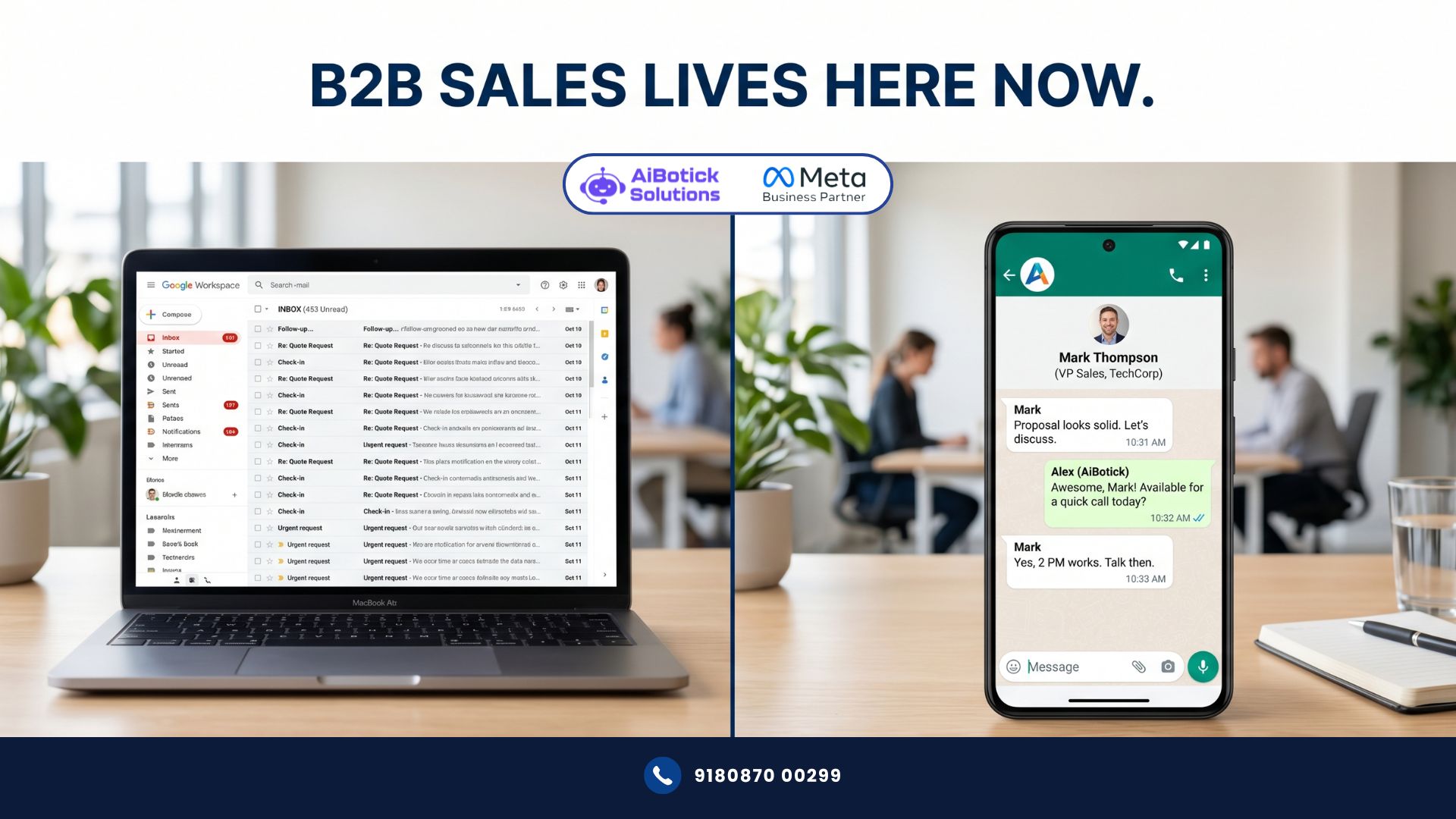
B2B buying decisions in India are made by human beings. Those human beings are on WhatsApp 40-50 times a day. Their email? Maybe twice. Their phone? They’ll let it ring out if they don’t recognise the number.
But a WhatsApp message from someone they’ve met, spoken to, or been introduced to? That gets read. Almost always.
I learned this the hard way actually. Early in my career — this was maybe 11-12 years ago — I was doing enterprise sales for a mid-size IT firm. We were doing everything “correctly.” Cold emails. LinkedIn messages. Following up via phone. Conversion rate was pathetic. Then a colleague of mine started sending WhatsApp messages to prospects after the first intro call. Informal. Conversational. Just checking in.
His close rate was 40% higher than the rest of the team within 3 months. Management thought he had some magic script. He didn’t. He just moved the conversation to where the buyer actually was.
That stuck with me. 15 years later, it’s even more true.
The B2B Buying Reality in India in 2026
Let’s be honest about how B2B decisions actually get made in Indian companies.
The decision-maker is usually a VP, Director, or business owner. They’re busy. They’re getting 200 emails a day. They have 12 WhatsApp groups they’re active in. They trust people they know — and they buy from people they trust.
The buying process looks something like this:
- Someone gets introduced to your product (via LinkedIn, referral, exhibition, cold outreach)
- They show mild interest — “send me some details”
- You send a deck or brochure
- They go quiet
- You follow up 2-3 times via email
- Silence
- Deal dies
Sound familiar? 😅
The problem isn’t your product. It’s the channel. Email is where “I’ll get back to you” goes to die.
WhatsApp B2B sales flips this entire sequence.
How WhatsApp B2B Sales Actually Works — Step by Step
Step 1: The Warm Introduction on WhatsApp
Don’t cold-message strangers on WhatsApp. That’s spam and it will backfire.
WhatsApp B2B sales starts after the first point of contact — a LinkedIn exchange, a mutual introduction, an exhibition meeting, an inbound inquiry. Once there’s been any interaction, WhatsApp becomes the natural next channel.
“Hey [Name], Mohit here from AiBotick — we connected at the Mumbai Tech Summit last week. Sharing a quick 2-min video on what we discussed. Happy to set up a call if useful.”
Short. Contextual. Personal. No deck attached. Just a foot in the door.
Step 2: Share Content That Doesn’t Feel Like Sales
This is where WhatsApp B2B sales gets interesting — and where most people mess it up.
They immediately go into pitch mode. Pricing sheets. Feature lists. Comparison tables. The prospect’s brain shuts down. Ye sab toh email mein bhi aata hai, kya farak pada.
Instead, share something genuinely useful:
- A short case study from their exact industry (“We just helped a Pune-based logistics company cut their customer query time by 60% — thought you’d find this relevant”)
- A stat that surprises them
- A 90-second screen recording showing exactly the one feature that solves their specific pain
Content that creates a “huh, that’s interesting” moment — not a “oh great, another vendor pitch” moment.
If you want to understand how this connects with a broader sales funnel, read this: how a WhatsApp sales funnel works end to end — especially the middle-of-funnel nurture section, which is exactly where most B2B deals are won or lost.
Step 3: Move the Decision Conversation to WhatsApp
Once there’s engagement — they replied, they asked a question, they shared the video with their team — that’s your signal.
Move the decision conversation here. Don’t go back to email.
“Happy to address any questions your team has — easier on WhatsApp than a 45-min call at this stage. What’s the one thing you need clarity on before moving forward?”
Lower friction. Higher speed. Decision cycles that used to take 3 months can compress to 3 weeks when the conversation is happening in real time on WhatsApp.
Step 4: Use WhatsApp for the Proposal Follow-Up
You’ve sent the proposal. Now what?
Most salespeople wait. And wait. And send a polite email. Which gets buried.
Instead — WhatsApp B2B sales means you follow up here:
“Hey [Name], proposal landed in your inbox yesterday. Wanted to check — did you get a chance to look at Section 3 specifically? That’s the part most relevant to your operations setup.”
Specific. Not generic. Shows you know their situation.
Actually wait — even better: send the proposal summary as a WhatsApp message first. 5 bullet points. Key numbers. Then say the full deck is in their email. This way they’ve already engaged with the content before they open the email.
What Makes WhatsApp B2B Sales Different from B2C
B2C on WhatsApp is mostly broadcast-based. One to many. Sale campaign, product launch, flash offer.
WhatsApp B2B sales is one to one. Or one to a small buying committee. It’s conversational, not broadcast.
The metrics that matter are different too:
| B2C WhatsApp | B2B WhatsApp |
|---|---|
| Open rate | Response rate |
| Click rate | Conversation depth |
| Campaign reach | Relationship strength |
| Conversion per broadcast | Deal size per conversation |
B2B is slower. Higher stakes. And infinitely more valuable per deal.
Real Example: How a Software Company in Hyderabad Used WhatsApp B2B Sales to 3x Their Pipeline
This is a company that sells HR software to mid-size manufacturing firms. 50-500 employee segment. Average deal size around Rs.3-4 lakhs per year.
Their sales cycle was 90-120 days. Email-heavy. High drop-off after demo.
They shifted their post-demo follow-up entirely to WhatsApp. Personalised messages. Sharing relevant case studies from manufacturing clients. Using voice notes occasionally — because a 45-second voice message from a founder feels very different from a text.
No no, scratch that — the voice note thing deserves its own moment. Because this is underused in B2B WhatsApp sales and it’s genuinely powerful.
A 40-second voice note from the founder saying “Hey Rajan, just thinking about your situation — the concern you raised about data migration, I’ve seen this exact thing 4 times this year. Here’s how we handled it each time…” That builds trust faster than 10 emails. Seedha dil se baat lagti hai.
Back to the Hyderabad company — their average sales cycle dropped from 100 days to 65 days. Pipeline velocity went up. And deal closure rate improved by 28% in 6 months.
They didn’t change their product. They didn’t hire new salespeople. They changed the channel.
What People Get Wrong About WhatsApp B2B Sales
Wrong assumption #1: “B2B buyers want formal communication.”
They want effective communication. If WhatsApp is faster and clearer, they’ll use it. I’ve had VPs of Operations from large corporates prefer WhatsApp over email explicitly. “Just send it on WhatsApp yaar, email mein dhundhna padta hai.”
Wrong assumption #2: “WhatsApp is unprofessional for business.”
WhatsApp Business API with a verified business profile, proper templates, a shared inbox — this is as professional as any CRM-integrated email system. The perception is changing fast.
Wrong assumption #3: “We can’t track B2B conversations on WhatsApp.”
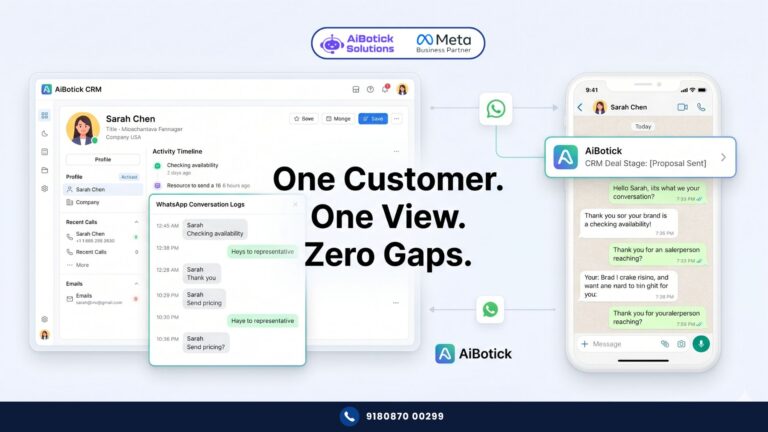
With AiBotick’s shared team inbox, every conversation is logged, tagged, assigned, and trackable. Your sales manager can see every touchpoint. Every response rate. Every drop-off point. It’s actually more trackable than most email setups at SME level.
Wrong assumption #4: “Our buyers are too senior for WhatsApp.”
Senior buyers are busiest. They have the least time for formal channels. A sharp, well-timed WhatsApp message cuts through faster than anything else. Could be wrong, but I’ve seen this with CXO-level buyers consistently across industries.
Setting Up WhatsApp B2B Sales Properly — What You Need
This isn’t about just using your personal WhatsApp for sales. That approach breaks down fast when you have more than 2 salespeople and more than 50 active prospects.
What you actually need:
1. WhatsApp Business API — so multiple sales team members can access the same number, and conversations are tracked centrally
2. A shared team inbox — your sales exec, your founder, your pre-sales person, all handling conversations from one number without confusion or duplication. This is how you manage multiple agents on one WhatsApp number without your team stepping on each other
3. Contact tagging and segmentation — tag prospects by industry, deal stage, company size. So you’re sending the right follow-up to the right person at the right time
4. Message templates — pre-approved templates for key moments: post-demo follow-up, proposal share, objection handling, renewal conversation. Not scripts. Conversation starters.
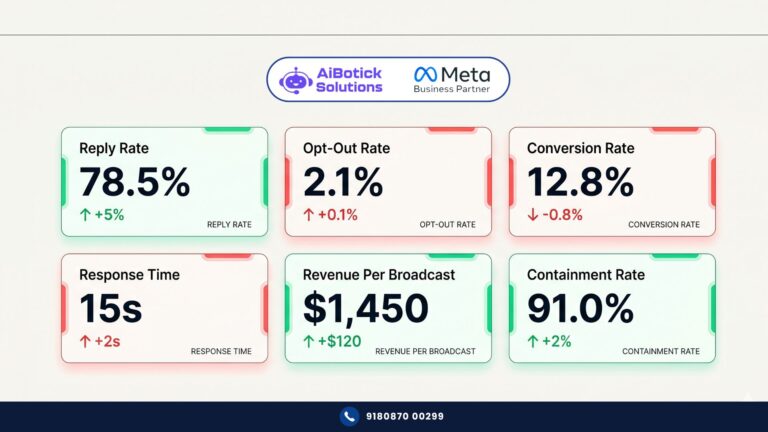
5. Analytics — response rates per sales rep, per message type, per industry. So you’re iterating based on data, not gut feel.
Honestly? My Opinion on WhatsApp B2B Sales
I think the businesses that build a proper WhatsApp B2B sales process in 2026 will have a significant advantage for the next 3-4 years. Not because WhatsApp is magic. But because most of their competitors are still sleeping on it.
The window where this is a differentiator won’t stay open forever. When everyone does it, it stops being an edge.
Right now? It’s an edge. 💯
Quick Action Plan — Start WhatsApp B2B Sales This Week
- Identify 20 warm prospects who have interacted in the last 60 days but haven’t converted
- Move them to WhatsApp — not cold, just the next natural touchpoint after existing contact
- Send a value message first — case study, insight, relevant stat. Not a pitch.
- Follow the Day 1 / Day 3 / Day 7 sequence — context-specific, not generic
- Track who responds — this tells you who’s actually in-market right now
- Close on WhatsApp — don’t move it back to email once it’s working
Start with 20. See what happens in 2 weeks. Then scale.
Your B2B sales pipeline is sitting on a channel you’re probably underusing. Isko seriously lo.
If you want to set up a proper WhatsApp B2B sales system for your team — Chat with us on WhatsApp and let’s figure out what your setup should look like.
— Mohit Shah | 15+ years in IT industry | 4+ years in WhatsApp automation | Worked with various MNC brands | Now helping businesses figure out what actually works
Q1: Does WhatsApp B2B sales actually work for high-ticket deals?
A1: Yes — and often better than email for high-ticket deals. WhatsApp B2B sales compresses decision timelines because conversations happen in real time. A buying committee that would take 3 weeks to align over email can often get clarity in 3-4 days when the conversation moves to WhatsApp. The key is keeping messages contextual and value-first, not pitch-heavy.
Q2: Is it unprofessional to use WhatsApp for B2B sales in India?
A2: Not anymore. Senior decision-makers across industries — manufacturing, finance, IT, logistics — actively prefer WhatsApp for quick communication. A verified WhatsApp Business profile with structured templates and a shared inbox is as professional as any CRM-integrated email system. The perception shifted significantly between 2023 and 2026.
Q3: How do I manage WhatsApp B2B sales across a team without losing track of conversations?
You need WhatsApp Business API — not the regular WhatsApp Business app. With API access through a platform like AiBotick, your entire sales team operates from one number with a shared inbox. Every conversation is logged, tagged by deal stage, and assigned to specific reps. Your sales manager gets full visibility without needing to be in every chat.