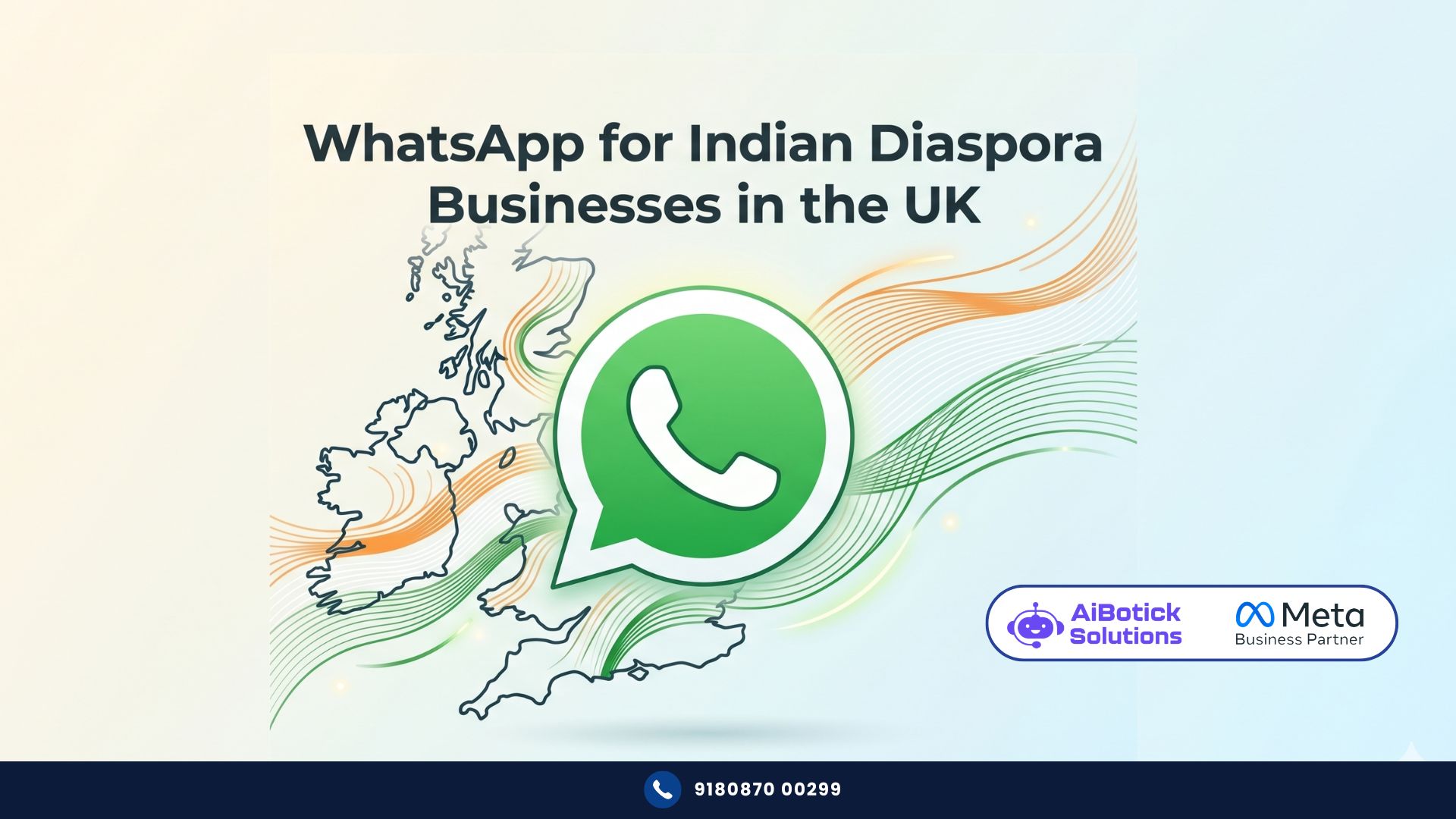
1.8 million Indians in the UK. Billions in purchasing power. And most Indian diaspora businesses still running their customer communication on personal WhatsApp numbers with zero automation.
Yaar, the opportunity here is almost embarrassing.
I’ve spoken to Indian business owners in Leicester, Southall, Birmingham — people running clothing stores, grocery chains, restaurants, jewellery shops, travel agencies, immigration consultancies. Smart people. Hustling hard. And almost all of them managing customer relationships the same way their shop assistant back in Ahmedabad does — manually, messily, with three phones on the counter.
It doesn’t have to be this way. And if you’re reading this from the UK — or you’re advising someone who is — this one’s specifically for you.
Why WhatsApp Indian Diaspora Strategy Is Different From Generic UK Marketing
Let me be direct about something first.
Generic UK digital marketing advice will tell you: “Use email. Run Google ads. Build a loyalty app.” That advice is written for British high-street businesses targeting mainstream UK consumers.
Indian diaspora businesses operate differently. Your customers are:
- Predominantly South Asian — they use WhatsApp the way white-collar British consumers use email
- Community-driven buyers — word of mouth on WhatsApp family groups moves product faster than any Facebook ad
- Bilingual — comfortable in English but emotionally connected to Gujarati, Punjabi, Hindi, Tamil, Telugu
- Loyal — if you serve them well, they come back, and they bring their entire extended family
So the question isn’t “should I use WhatsApp?” — it’s “why aren’t you using it properly yet?”
The Real Landscape — WhatsApp Indian Diaspora in UK Numbers
Before we get into the how, let’s ground this properly:
- UK has 1.8 million people of Indian origin — one of the largest diaspora communities in the world
- WhatsApp penetration among British South Asians is estimated at 90%+ — far above the UK general population average of around 55-60%
- Cities with significant Indian communities: London (Harrow, Wembley, Southall, East Ham), Leicester, Birmingham, Manchester, Bradford, Coventry
- Business sectors dominated by Indian diaspora: Grocery and food retail, restaurants and catering, jewellery, clothing and fashion, travel agencies, immigration and visa consultancy, financial services (IFA, mortgage broking), healthcare (GP practices, pharmacies, dental clinics), education and tutoring
Actually wait — the tutoring and education angle is massively underserved. Indian families in the UK spend disproportionately on supplementary education for their children. If you run a tutoring centre or online coaching for UK Indian students and you’re not on WhatsApp automation — you’re leaving serious money on the table.
What Indian Diaspora Business Owners Get Wrong About WhatsApp in the UK
Look, here’s the thing — I’ve seen this pattern so consistently that I could predict it before even speaking to the business owner.
Wrong move #1: Using personal WhatsApp for business
You have one number. Three family members also have access. Your customer messages are mixed with your cousin’s wedding planning group. You’ve accidentally sent a Diwali discount offer to your sister’s kitty party group at least once.
Seedha bolta hoon — this is not a business communication system. This is chaos with a green icon.
WhatsApp Business API gives you a dedicated business number, a proper inbox, and the ability to have multiple team members handling conversations without anyone seeing each other’s personal messages.
Wrong move #2: Treating all customers the same
Your Gujarati grocery customer who buys every week has completely different needs from the customer who comes in once before Diwali for mithai and snacks.
One needs automated restock alerts and weekly specials. The other needs a seasonal promotional sequence that warms them up 3 weeks before the festival.
Same broadcast to both? You’ll either bore the loyal customer or overwhelm the occasional one.
Wrong move #3: Ignoring the community group dynamic
This one is actually the biggest missed opportunity.
Indian diaspora communities in the UK are deeply connected through WhatsApp groups — family groups, temple groups, community association groups, school parent groups. One satisfied customer sharing your business number in a group of 200 people is worth more than £500 in Facebook ads.
But here’s the thing — you can’t force this. You can enable it. By being so responsive, so helpful, so personal on WhatsApp that sharing your number becomes the natural thing people do.
A Real Story — Because Theory Bores Me
No no, scratch that. Let me give you a concrete example instead of a framework first.
A Punjabi family running a wedding jewellery and clothing business in Leicester — second generation, parents started the shop in the 80s. Beautiful products. Terrible customer communication.
Pre-WhatsApp API, this is what their process looked like:
- Customer enquiries came on personal WhatsApp, Instagram DMs, and sometimes email
- One family member was responsible for replying — when she was on holiday, enquiries sat unanswered for days
- Appointment bookings for in-store consultations were managed in a physical diary
- No follow-up after purchase. None.
- Repeat purchases happened only when the customer remembered to come back
They set up WhatsApp Business API with AiBotick. Here’s what changed:
- A chatbot handles initial enquiries 24/7 — “Are you looking for bridal wear, men’s sherwani, or jewellery?” — routes automatically
- Appointment booking is automated — customer picks slot, gets confirmation, gets reminder 24 hours before
- Post-purchase sequence triggered after every purchase — thank you message, care instructions for the outfit, request for photo/review 2 weeks later
- Seasonal broadcast campaigns (Navratri, Diwali, Eid, wedding season) sent to segmented lists
In the first 6 months: Revenue from repeat customers grew 44%. Appointment no-shows dropped from 28% to 7%. And their WhatsApp contact list went from 340 numbers to 1,100 — almost entirely through community referrals.
That last number is the one that matters most. Community referrals. No ad spend. Just a business that was suddenly easy and pleasant to deal with on WhatsApp.
WhatsApp Indian Diaspora — Use Cases That Work Best in the UK
Let me break this down by sector because the specifics matter.
Grocery and Food Retail
- Weekly specials broadcast: Every Thursday evening, send a broadcast with weekend specials — fresh produce, new arrivals, festival items. Keep it conversational, not salesy. “Yaar, fresh methi aaya hai aaj — comes in Friday morning. Want me to keep a bunch aside?” That tone works.
- Restock alerts: “Your favourite Haldiram’s Aloo Bhujia is back in stock — want us to hold a pack?” — high conversion, zero ad cost
- Click & collect coordination: Customer orders on WhatsApp, picks up same day. Simpler than building an app.
Restaurants and Catering
- Table bookings via WhatsApp: Massively more convenient than phone calls, especially for older customers
- Catering enquiry flow: “How many guests? Veg or non-veg? Any dietary requirements?” — automated qualification before human handoff
- Event follow-up: After a catering event, a 3-message sequence — thank you, feedback request, discount for next booking. Takes 10 minutes to set up. Runs forever.
Travel Agencies (India Travel Specialists)
This sector is particularly interesting. Indian diaspora travel back to India regularly — for weddings, festivals, family visits, pilgrimages. The travel agents serving this community are mostly still running on phone calls and emails.
WhatsApp Indian diaspora travel agencies can completely transform this:
- Automated visa document checklist sent after booking
- Flight change alerts via WhatsApp (people check WhatsApp faster than email)
- Seasonal India travel deal broadcasts — Diwali travel, summer holidays, December-January peak
- Post-travel review requests — automated, warm, timed 3 days after return
For the detailed automation flows behind this kind of travel setup, our WhatsApp for travel agents guide covers the exact sequences — most of it directly applicable to UK-based operations.
Immigration and Visa Consultancy
Big sector. Very relationship-driven. Very WhatsApp-appropriate.
- Document collection via WhatsApp — instead of emailing 17 attachments back and forth
- Application status updates — clients are anxious, proactive updates build trust massively
- Appointment reminders for biometrics, interviews, etc.
- Referral sequence — “Know someone applying for a visa? Here’s our WhatsApp link to share”
Education and Tutoring
Actually wait — this is the one I’m most excited about for UK Indian diaspora.
Indian parents in the UK are intensely invested in their children’s education. 11+ tutoring, GCSE prep, A-Level coaching, university application support — the demand is enormous and the community is tightly connected.
A tutoring centre in Harrow that gets WhatsApp automation right can:
- Run automated trial lesson booking flows
- Send weekly progress updates to parents via WhatsApp (parents love this — it’s the kind of involvement they want)
- Run referral campaigns through parent WhatsApp groups
- Automate fee reminders without awkward phone calls
For the complete framework on how education businesses should structure their WhatsApp setup, the WhatsApp admission automation guide is worth reading — it’s India-focused but the automation logic is identical.
What People Get Wrong About WhatsApp Business API in the UK
Myth-busting time. Because there are a few things floating around that are genuinely wrong.
Myth: “UK customers prefer email over WhatsApp”
For mainstream British consumers — maybe. For British South Asian consumers — absolutely not. The data is clear. WhatsApp is the primary communication channel in this community. I’ve spoken to business owners who’ve completely stopped sending email newsletters because their WhatsApp broadcasts get 10x the response.
Could be wrong, but I’ve seen this consistently — within Indian diaspora communities in the UK, WhatsApp open rates run at 85-90%, compared to email open rates of 18-22% from the same customer list.
Myth: “GDPR makes WhatsApp marketing impossible in the UK”
Nope. GDPR doesn’t ban WhatsApp marketing — it regulates it. The difference is:
- You need explicit opt-in consent before sending marketing messages (WhatsApp Business API template messages)
- You need a clear opt-out mechanism
- You cannot buy contact lists and blast them
All of this is already baked into how WhatsApp Business API works — Meta requires template approval, opt-in before marketing, and opt-out must be honoured. If you’re operating on official API infrastructure, you’re not in conflict with GDPR. You’re compliant by design.
Build your opt-in list properly — QR codes in-store, link on your website, opt-in at checkout — and you’re fine.
Myth: “WhatsApp is too informal for UK business communication”
Tell that to the 50 million UK WhatsApp users. The informality is the point. It’s why people respond. A warm WhatsApp message from a business they trust feels like a message from a friend. An email from the same business feels like junk mail.
How to Set Up WhatsApp Business API for a UK-Based Indian Diaspora Business
The technical process is the same as India. But here are the UK-specific considerations:
UK Phone Number: You need a +44 number for your WhatsApp Business account. This is non-negotiable for UK customers — seeing a +91 number reduces trust significantly. A UK SIM or a VoIP number with +44 works fine for verification.
Language in Templates: English is the primary language for Meta template submissions. But you can include Hindi/Gujarati/Punjabi phrases within English templates — “Namaste! Your order from [BusinessName] is ready for collection 🙏” — this kind of bilingual warmth is entirely acceptable.
Conversation Costs in UK: Meta charges per conversation, with international rates applying. For UK-based operations, the costs are manageable — budget approximately £0.03-0.05 per marketing conversation. At that cost, a broadcast to 1,000 customers costs £30-50. If one booking results from it — you’ve covered the cost 10x over.
Time Zone: If you’re managing from India (for Indian founders with UK operations), account for the IST to GMT/BST gap. Schedule broadcasts for UK morning or early evening — not 2 AM UK time.
The One Competitive Advantage Indian Diaspora Businesses Have That They’re Not Using
Ab toh, let me say the quiet part loud.
Indian diaspora businesses have something that mainstream UK competitors don’t — community trust. People in your community will go out of their way to support your business over a faceless chain, if they know you exist and if you make it easy to engage with you.
WhatsApp is the infrastructure for that trust at scale.
When your customer’s mum asks “where did you get that lehenga?” and your customer can forward your WhatsApp number right there in the family group — that’s a customer acquisition channel that costs you nothing except the quality of your product and the warmth of your WhatsApp presence.
Build that. Protect that. Scale that.
If you’re ready to set up WhatsApp Business API for your UK operation — or you’re an agency advising UK Indian diaspora businesses — let’s talk about exactly what you need. AiBotick handles everything: setup, onboarding, live training, dedicated support. Not just for India. For wherever your business is. 💯
— Mohit Shah │ 15+ years in IT industry │ 4+ years in WhatsApp automation │ Worked with various MNC brands │ Now helping businesses figure out what actually works
Q1: Can Indian diaspora businesses in the UK use WhatsApp Business API legally?
A1: Yes — WhatsApp Business API is fully legal in the UK. GDPR compliance is required, which means you need explicit opt-in consent before sending marketing messages and a clear opt-out option. WhatsApp Business API through an official provider like AiBotick is already structured for GDPR compliance by design.
Q2: Do I need a UK phone number to use WhatsApp Business API for my UK business?
A2: Yes — a +44 UK number is strongly recommended. UK customers are significantly less likely to trust or respond to a business WhatsApp account showing a +91 Indian number. A UK SIM or VoIP number with a +44 prefix works for API verification.
Q3: Which sectors of Indian diaspora businesses in the UK benefit most from WhatsApp automation?
A3: Grocery and food retail, restaurants and catering, wedding jewellery and clothing, travel agencies specialising in India routes, immigration consultancies, and tutoring centres all see strong results. The common thread is a South Asian customer base that already prefers WhatsApp over email or phone calls for business communication.