Let me tell you something most “global expansion guides” won’t.
Malaysia and Indonesia are not India. And if you walk into those markets treating WhatsApp the same way you run it here — same flows, same broadcast strategy, same assumptions — you will waste months and serious money figuring out what went wrong.
I’ve seen it happen. More than once.
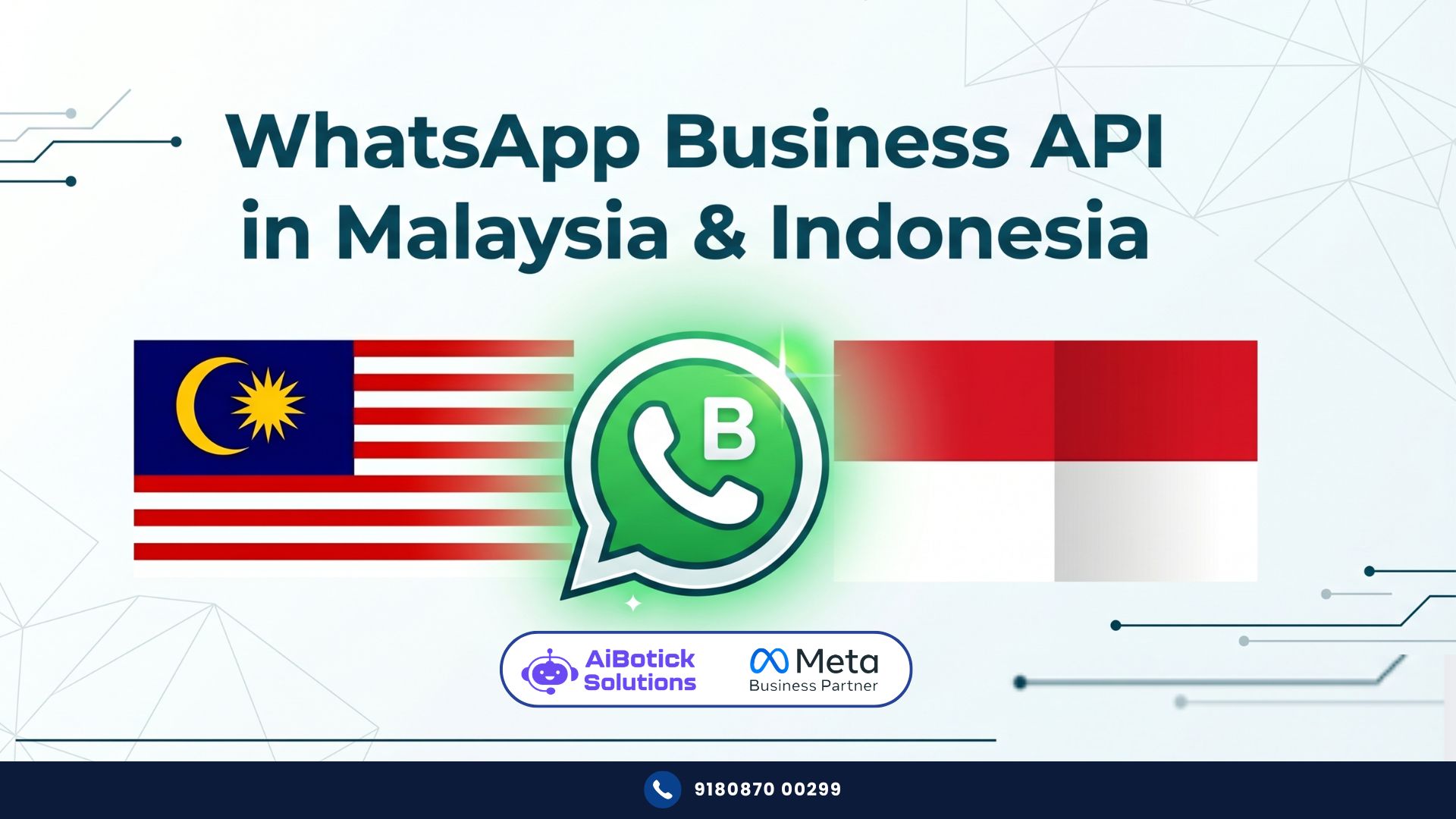
The good news? WhatsApp Business API for Malaysia and Indonesia adoption is genuinely massive. These aren’t emerging markets for WhatsApp — they’re mature ones. But the way people use it, the expectations they have, and the compliance rules you have to follow? Completely different game.
Let’s get into it properly.
WhatsApp Business API for Malaysia and Indonesia — Why These Two Markets Are Worth Your Attention
Quick reality check first — the numbers here are not small.
Malaysia:
- WhatsApp penetration: 83%+ of the adult population
- Used for everything from grocery orders to bank alerts to government notifications
- Business WhatsApp usage is normalised — people expect to be contacted on WhatsApp
- English-Malay bilingual market — easier for Indian businesses to navigate
Indonesia:
- 112+ million WhatsApp users — third largest WhatsApp user base in the world
- WhatsApp is essentially the internet for a large section of the population
- Mobile-first, WhatsApp-first behaviour deeply embedded in daily life
- Bahasa Indonesia dominant — you will need localised communication
Seedha bolta hoon — if you’re an Indian D2C brand, SaaS company, or any business thinking about Southeast Asia, Malaysia is your easiest first step. Indonesia is the big prize but needs more localisation effort.
Both markets? WhatsApp API is the right infrastructure to build on. Not Instagram DMs. Not email. WhatsApp.
What Indian Businesses Get Wrong When Entering These Markets
Yaar, I’ve watched this play out so many times. A company does well in India, decides to expand to SEA, and just… copies the playbook. Same broadcast templates. Same chatbot flows. Same aggressive follow-up sequences.
And then they wonder why response rates are 40% lower than India.
Here’s what’s actually going wrong:
Mistake 1 — Same Message, Different Market
In India, a message that says “Offer ends tonight! Rs.999 only!” works because Indian buyers are trained on urgency-based marketing.
In Malaysia, that same energy reads as pushy. Malaysian buyers tend to research more, compare more, and decide slower. Your WhatsApp sequences need to reflect that.
In Indonesia? The tone needs to be warmer. More relationship-first. Less transactional. The word “Halo” in your first message will outperform “Hello” every single time — not because of language, but because it signals you understand them.
Fix: Build market-specific templates. Not just translated — culturally adapted.
Mistake 2 — Ignoring Language Localisation
Actually wait — this one kills campaigns before they even start.
English works in Malaysia for business communication. Most educated Malaysians are comfortable in English. But mixing in basic Bahasa Malaysia phrases (“Selamat datang” — welcome, “Terima kasih” — thank you) increases engagement noticeably.
Indonesia is different. Bahasa Indonesia is non-negotiable if you’re targeting beyond major metro areas like Jakarta and Surabaya. Your chatbot flows, your broadcast messages, your automated sequences — all of it needs proper Bahasa Indonesia, not Google Translate Bahasa Indonesia.
I’ve seen a Bangalore-based EdTech run a full campaign in Indonesia in English. Open rate was fine (WhatsApp, after all). Response rate? 4%. Same campaign in Bahasa Indonesia? 23%.
Numbers don’t lie.
Mistake 3 — Assuming Same Regulations Apply
This one is actually important — and not enough people talk about it.
WhatsApp Business API for Malaysia and Indonesia markets both operate under PDPA (Personal Data Protection Act in Malaysia) and Indonesia’s PDP Law. These are real regulations. You cannot just import a contact list and start broadcasting.
Key rules:
- Explicit opt-in required before sending marketing messages
- Users must have a clear way to opt out
- Data cannot be shared across entities without consent
- Penalties for violations are real — not theoretical
If you’re using the official WhatsApp Business API through a verified provider like AiBotick, you’re on Meta’s approved infrastructure — which means your messaging already follows Meta’s policies. But your opt-in collection process still needs to be compliant with local laws.
What WhatsApp Business API for Malaysia and Indonesia Actually Looks Like in Practice
Let me give you a real example instead of theory.
A premium skincare brand based in Mumbai started selling in Malaysia through a distributor network. They had 1,400 distributor contacts across Kuala Lumpur, Penang, and Johor Bahru. Every month, the team was manually sending product updates via personal WhatsApp. No tracking. No automation. Distributors would reply to the wrong thread. Updates would get lost.
They implemented WhatsApp Business API — specifically broadcast lists segmented by city and distributor tier, automated monthly product catalogues, and a shared team inbox so their KL-based coordinator could handle all queries from one number.
Results in 90 days:
- Distributor response rate went from 34% (manual WhatsApp) to 71% (API broadcasts)
- Monthly reorder queries dropped from 3 days average response time to 4 hours
- Revenue from Malaysia channel grew 38% — not because they added more distributors, but because existing ones were better serviced
Seedha point — the technology was the same WhatsApp API they could have used in India. The difference was market-appropriate segmentation and tone.
WhatsApp Business API for Malaysia and Indonesia — The Use Cases That Work Best
Not every use case that crushes it in India translates directly. Here’s the honest breakdown:
Use Cases That Work Extremely Well in Both Markets
1. Customer Support Automation Both Malaysian and Indonesian customers heavily prefer WhatsApp over email for support. A chatbot that handles FAQs, order status, and basic troubleshooting? Absolute necessity. Not a nice-to-have.
2. Order Confirmations and Delivery Updates Ecommerce in both markets is booming — Shopee, Tokopedia, Lazada dominate. If you have your own D2C channel, WhatsApp order tracking builds massive trust because it’s a channel people actually check.
3. Appointment Reminders Healthcare, salons, financial advisory, coaching — the no-show problem is real in SEA just like India. WhatsApp reminders work. Dramatically. A Kuala Lumpur dental clinic group we know went from 31% no-show rate to 9% after implementing WhatsApp appointment reminders with a confirmation button.
4. Lead Nurturing for B2B This one is interesting — B2B WhatsApp in Malaysia is extremely normalised. Decision-makers expect to communicate on WhatsApp. Formal email chains for B2B sales in Malaysia feel outdated. WhatsApp drip sequences work here — check our WhatsApp lead nurturing guide for the exact framework.
Use Cases That Need Adaptation for SEA
Broadcasting promotions: Works, but frequency needs to be lower. India might tolerate 4-6 broadcasts a month. Malaysia and Indonesia? 2-3 maximum before opt-outs start spiking.
COD verification flows: COD is much less prevalent in Malaysia (most people pay online). Indonesia has more COD but it’s handled differently. Adapt accordingly.
Aggressive sales sequences: Tone it down. Relationship-building first, conversion second. The sequence length can be longer — people don’t mind, but they will mind if it feels pushy.
Setting Up WhatsApp Business API for Malaysia and Indonesia — What’s Different
Most of the technical setup is identical to India. You still need:
- A verified WhatsApp Business Account (WABA)
- An official API provider (this is where AiBotick comes in)
- Approved message templates for outbound marketing
But here’s what’s different:
Phone Number: You’ll need a Malaysian (+60) or Indonesian (+62) number for your WhatsApp Business account if you’re operating locally. You can’t run Indonesian customer communication from an Indian number and expect trust. People see the country code — it matters.
Template Language: Meta allows template approval in multiple languages. Get your Bahasa Indonesia templates approved. Don’t run English templates and “translate” on the fly.
Conversation Costs: International conversations on WhatsApp API cost more than India-domestic conversations. The Meta pricing structure treats each country’s user as a separate billing category. Budget accordingly — and talk to AiBotick about this before you scale, because the cost-per-conversation calculation needs to factor into your unit economics.
For businesses doing serious volume in Indonesia, look at our WhatsApp automation ROI calculator guide — the framework works for international markets too, you just plug in different conversation costs.
What People Get Wrong About WhatsApp in Indonesia Specifically
Okay, myth-busting time. Because there’s a lot of noise about Indonesia.
Myth: Indonesia is too fragmented — too many languages, WhatsApp won’t work consistently.
Nope, that’s not it. Bahasa Indonesia is the national language and is understood universally. Yes, there are 700+ regional languages — but for business communication, Bahasa Indonesia is the standard. It’s not more fragmented than India. Actually — could be wrong, but I’ve seen this consistently — Indonesia’s linguistic situation for business purposes is simpler than India’s, where you have to think about Tamil vs Telugu vs Marathi vs Bengali segmentation seriously.
Myth: You need a local entity in Indonesia to use WhatsApp Business API.
False. You need a local phone number. Not a local entity. An Indian company can legally operate WhatsApp Business API for Indonesian customers without incorporating locally. Talk to your legal team about data residency rules, but the API setup itself doesn’t require local incorporation.
Myth: Indonesian customers won’t trust automated messages.
Wrong move to assume this. Indonesian buyers are extremely tech-comfortable — TikTok commerce, Shopee live, Instagram shopping. They’re used to brand communication. A well-designed chatbot in proper Bahasa Indonesia with a warm tone will outperform a human agent copy-pasting responses from a manual WhatsApp. Every time.
A Quick Framework — Before You Launch WhatsApp in Malaysia or Indonesia
Ab toh, if you’re serious about this, do this before you send a single message:
Step 1: Define your number strategy Local number or Indian number? For serious market presence — local. For testing — Indian number works but conversion will be lower.
Step 2: Build compliant opt-in flows No imported contact lists. Clean opt-in. Website widget, checkout page, lead form — all with explicit WhatsApp consent checkboxes.
Step 3: Create market-specific templates Don’t translate. Adapt. Hire a native Bahasa Indonesia speaker to review your templates before you submit for Meta approval. Rs.2,000 spent on a freelance reviewer can save you weeks of failed template submissions.
Step 4: Set up a shared team inbox If you’re handling SEA from India, you need a team inbox with agents who understand the market. One WhatsApp number. Multiple agents. Full conversation history visible. This is core infrastructure, not optional.
Step 5: Start with support automation, then add marketing Don’t lead with broadcasts. Start with automating customer support — order updates, FAQ handling, appointment reminders. Build trust first. Then introduce promotional broadcasts once customers are used to your WhatsApp presence.
Step 6: Monitor opt-out rate religiously Your opt-out rate tells you everything about whether your tone and frequency are right for the market. In India, 2-3% opt-out on a broadcast is acceptable. In Malaysia and Indonesia? Try to stay under 1.5%. If you’re above that consistently — something is wrong with your content or frequency.
Why WhatsApp Business API for Malaysia and Indonesia Works Better With the Right API Partner
Look, here’s the thing — the WhatsApp Business API is the same globally. What changes is how your provider supports you when things get complicated.
- Template rejections (happens more for non-English templates)
- Number porting if you switch from a local to a regional setup
- Conversation cost management across multiple countries
- Shared inbox setup that works across time zones
AiBotick handles all of this with you — not just for you. Every client gets personalised onboarding, live training sessions, and a dedicated WhatsApp support group. Doesn’t matter if you’re setting up for India or Malaysia or Indonesia. The support doesn’t change.
Ab yeh baat koi competitor nahi batayega tumhe — Wati, AiSensy, Interakt, they’ll set you up and say “figure it out.” We don’t do that.
If you’re planning a Southeast Asia expansion and want to know exactly what WhatsApp setup you need — for your specific business, your specific market, your specific product — let’s talk properly. 💯
— Mohit Shah │ 15+ years in IT industry │ 4+ years in WhatsApp automation │ Worked with various MNC brands │ Now helping businesses figure out what actually works
Q1: Does WhatsApp Business API work for Malaysia and Indonesia?
A1: Yes — both Malaysia and Indonesia have extremely high WhatsApp penetration (83%+ in Malaysia, 112 million users in Indonesia). WhatsApp Business API is fully functional in both markets and is the preferred business communication channel among local consumers and B2B buyers.
Q2: Do I need a local phone number to use WhatsApp Business API in Malaysia or Indonesia?
A2: You don’t need a local entity, but a local phone number (+60 for Malaysia, +62 for Indonesia) significantly improves trust and response rates. An Indian number can be used for testing, but for serious market presence, a local number is strongly recommended.
Q3: What language should WhatsApp messages be in for Malaysia and Indonesia?
A3: For Malaysia, English works well for business communication, though mixing basic Bahasa Malaysia phrases improves engagement. For Indonesia, Bahasa Indonesia is non-negotiable for campaigns beyond Jakarta — English-only campaigns consistently show response rates 4-5x lower than properly localised Bahasa Indonesia messages.